


Beverage Making Supplies
Mangrove Jacks Yeast
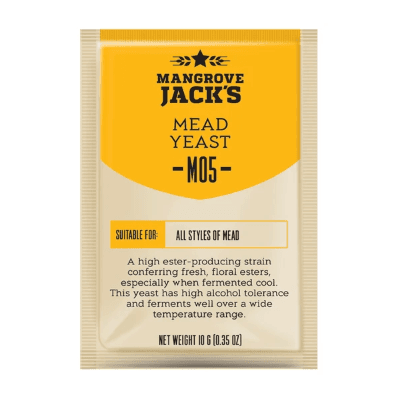
This is the yeast I reach for when I make mead. One little yellow packet, and I get a smooth, satisfying glass at the end instead of something thin or harsh. It is built for honey. Traditional mead, fruit mead, a small kitchen batch — it does the work without drama. The strain throws fresh, floral esters, especially if you keep the ferment on the cooler side of its range. That is the part I want. Honey should taste like honey, not like a stuck ferment or a hot alcohol note. M05 ferments clean across a wide temperature window and will take the alcohol up to about 18%. One 10-gram sachet covers up to 17 liters, which is more than a one-gallon jug and enough for a real batch.
Why it earns its place
It is reliable. It starts, it finishes, and the mead that comes out is drinkable without an apology. High attenuation means it can run dry if that is the style you are making. High flocculation means it settles instead of hanging in the glass. I do not keep a shelf of experimental yeasts. This is the one that already works.
How I actually use it
I sprinkle it straight onto the must. No starter, no fuss. Honey and water, yeast on top, airlock on, and I leave it alone. Cooler fermentation gives me more of that floral note. Warmer still works, it just drinks a little broader. Honey is sugar-rich and nutrient-poor, so I add yeast nutrient.
Specs
- Size
- 0.35 Ounce (Pack of 1)
What to know before you buy
It finishes dry. If you want a sweet mead, you stabilize and back-sweeten, or you plan the starting gravity for it. Store the sachet in the fridge. Do not skip nutrient just because the ferment looks lively on day one. A mead without it can stall or taste stressed, and that is not the fault of the honey.
What else I considered
Wine yeasts like Lalvin EC-1118 will ferment honey, and a lot of people use them. They are workhorses. M05 is the one that tastes like mead to me — floral, rounded, and finished instead of stripped. I stopped hunting after this packet.